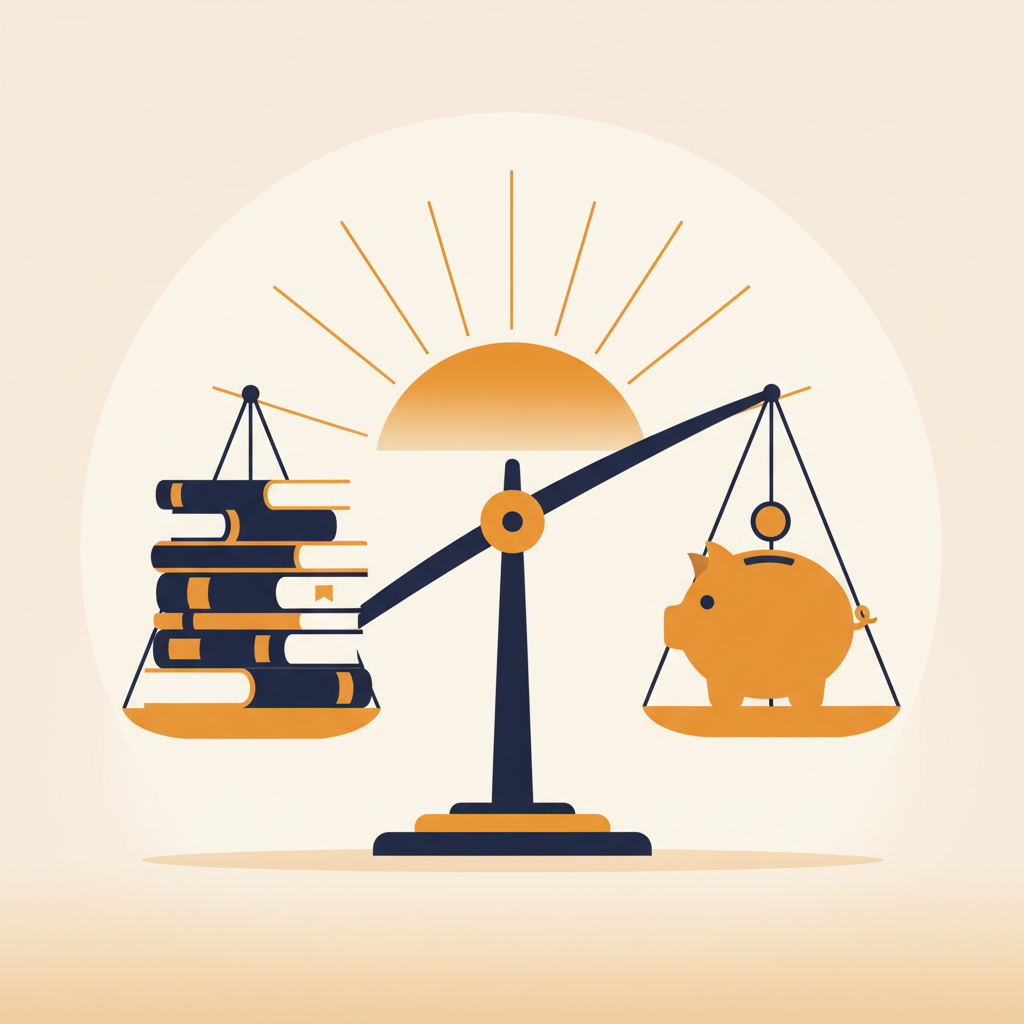
The modern American living room has become a secondary classroom, cluttered with a rotating carousel of subscription logins, monthly recurring charges, and "premium" academic portals. As we navigate the 2026 academic landscape, the pressure to supplement traditional schooling with private edtech platforms has reached a fever pitch. Parents are often told that if they aren't paying for a "pro" tier, their student is falling behind. The marketing is slick, the interface designs are polished, and the promises of higher GPAs and perfect SAT scores are ubiquitous.
Yet, as the digital education market has matured, the correlation between subscription fees and actual academic mastery has become increasingly tenuous. We are witnessing a shift where high-quality, non-profit, or open-access platforms are providing the same—and often superior—pedagogical outcomes as their expensive counterparts. For the average American household, the default assumption that "paid equals better" is not only financially draining; it is often a pedagogical fallacy that prioritizes software features over substantive learning.
The Economics of the 2026 Edtech Market
By 2026, the educational technology sector has settled into a bifurcated reality. On one side, we have the "walled garden" platforms, venture-backed companies that rely on high-volume subscriptions to satisfy investors. On the other, we have the mission-driven platforms like Shrutam US, which operate on the belief that access to rigorous, standards-aligned content should be a public good rather than a tiered service.
When you pay for a platform, you are rarely paying for better educational outcomes. You are paying for marketing overhead, complex user interface design, and customer acquisition costs. A 2025 longitudinal study of high school students in Texas revealed that students using open-access, standards-aligned platforms performed statistically identical to those using premium, subscription-based counterparts in Algebra II and AP Biology. The difference lay not in the software, but in the consistency of practice.
The economic reality is simple: education is a commodity of content. If a platform provides a clear, high-quality explanation of a concept found in the Texas Essential Knowledge and Skills (TEKS) requirements—specifically those under 19 TAC Chapter 111 for Mathematics—the value of that content is inherent. Paying a premium for that same content, simply because it is wrapped in an expensive interface, is a transfer of wealth from families to software vendors that yields no measurable return on investment.
Red Flags: When the "Premium" Model Becomes a Liability
Not all paid platforms are created equal, and some represent a genuine risk to your student’s privacy and long-term academic success. As you evaluate tools for the 2026 school year, watch for these three indicators that a platform may be prioritizing profit over your child’s educational needs.
The Data Harvesting Trap
If a platform is free at the point of entry but requires extensive personal data, or if it is a paid platform that aggressively tracks behavioral markers outside of the academic context, pause. By 2026, the value of student behavioral data has skyrocketed. Some platforms use "adaptive learning" algorithms not to help your student learn faster, but to profile their learning style for third-party advertisers. Always review the privacy policy to see if they sell "anonymized" data sets.
Content Locking and Artificial Scarcity
A common tactic in the paid edtech space is "feature gating." This is where a platform provides a basic explanation of a topic but locks the practice problems, the step-by-step solutions, or the progress tracking behind a paywall. This creates an artificial scarcity of resources. If a platform forces you to pay to see how your child is performing on a specific TEKS-aligned standard, it is likely prioritizing a recurring subscription model over pedagogical transparency.
The "Gamification" Distraction
While moderate gamification can encourage engagement, many paid platforms rely on it to keep students addicted to the software rather than the material. If your student is spending more time earning virtual badges than solving complex physics problems, the platform is optimizing for retention—not for mastery.
When Paid Is Actually Worth It
There is a nuance to this argument: not all paid services are bad. There are specific scenarios where the financial investment is justified, but these almost exclusively involve human interaction.
- One-on-One Tutoring: Software cannot replace the nuance of a human tutor who understands a student’s specific anxieties, learning pace, and individual strengths. If you are paying for a human to review essays, coach a student through a difficult concept, or provide emotional support during exam prep, you are paying for labor, not software. This is a high-value investment.
- Specialized Diagnostics: In rare cases, a platform might offer a highly specialized, clinically validated diagnostic tool that identifies learning disabilities or specific cognitive gaps that school-provided tools miss. If the tool is backed by peer-reviewed research and provides actionable data that a teacher can use, it may be worth the cost.
- Institutional Access: Sometimes, a school district will provide access to a premium platform. In these cases, the school has already negotiated the privacy agreements and evaluated the content. Use these tools, as they are effectively "free" to you and have undergone a vetting process.
If you are paying $30 a month for a platform that simply provides videos and multiple-choice quizzes, you are overpaying. You can find that same level of rigor on platforms like Shrutam US, which focuses on delivering the core curriculum—such as the requirements for AP Calculus AB or BC—without the subscription burden.
How to Evaluate Any Edtech Tool in 2026
Before entering your credit card information or signing up for a "free trial" that automatically renews, apply this checklist to ensure the tool is actually serving your student's academic goals.
- Standards Alignment: Does the platform explicitly list the standards it covers? For Texas students, does it reference the TEKS? If a platform is vague about its alignment, it is likely using a "one-size-fits-all" curriculum that may not match what your student is actually being tested on in the classroom.
- The "Two-Week Test": Does the platform allow for meaningful progress in two weeks of daily use? If the answer is no, it is likely designed to keep you subscribed for months rather than helping the student master the material.
- Transparency of Solutions: A quality platform should show the "why" behind the answer. Avoid platforms that simply mark an answer as "Correct" or "Incorrect" without a detailed explanation of the logic.
- Portability: If you stop paying, do you lose access to the student’s performance data? You should be able to export your student's progress or history. If the platform holds your data hostage to ensure you keep paying, it is not a partner in your child’s education.
The Power of Focused Practice
The secret to academic success in 2026 is not the number of subscriptions a student has; it is the consistency of focused, standards-based practice. Whether your student is prepping for the May AP exam dates or working through their core Algebra I curriculum, the most effective tool is the one that provides clear explanations and immediate, actionable feedback.
Platforms like Aarambha and the broader Shrutam US ecosystem were built on the premise that the barrier to high-quality education should be nonexistent. By focusing on the core curriculum, we enable students to spend their time actually learning rather than navigating complex subscription interfaces. When you remove the financial friction, you allow the student to focus on the only thing that matters: mastering the content.
Key Takeaways
- Subscription fatigue is real: Paying for edtech does not guarantee better grades or deeper understanding; often, it just guarantees a monthly recurring charge for features you do not need.
- Prioritize standards-based content: Always look for explicit alignment to state standards, such as the TEKS, to ensure the material matches the classroom curriculum.
- Beware of "Free to Start" traps: Many platforms use free tiers to harvest data or build a dependency that eventually requires a paid subscription to access essential progress tracking.
- Human interaction is the only premium worth paying: Invest your education budget in human tutors or personalized mentors rather than software subscriptions that offer only automated feedback.
- Data ownership matters: If a platform does not allow you to export your student’s progress or history, it is not prioritizing your family’s long-term educational goals.